Showing posts with label patient. Show all posts

Thursday, May 05, 2016

Enteral Nutrition


I had the opportunity to attend the 2nd. Congress of Clinical Gastronomy and Nutrition, there was a conference about some features that have been updated within nutrition, especially enteral nutrition.

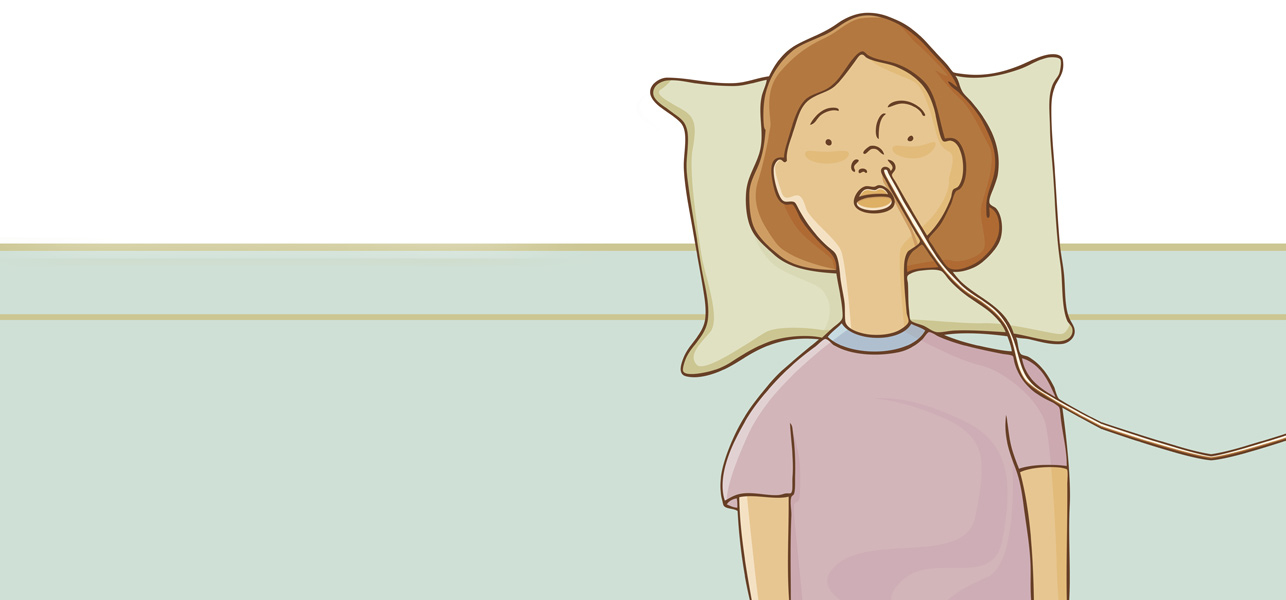
First of all, it's important to define what is enteral nutrition?. Enteral nutrition or tube feeding refers to the delivery of a nutritionally complete feed (with food that contains protein, carbohydrate, fat, water, minerals and vitamins according to patient needs) directly into your stomach or small intestine.

Enteral nutrition can be given through different types of tubes. You can use different connections, devices and other materials. The main problem is that these tubes and materials could be mistaken for medical use, causing infections and health problems in the patient. So in the congress it mentioned that the new material for enteral nutrition will be in accordance with an international color code. The violet color should be used to avoid confusion in the hospital. I think this is a great initiative that gives nutrition the attention it truly deserves in the treatment of patients.

Friday, April 29, 2016

Intrathecal Chemotherapy


On Thursday at The State Institute of Cancer took place the application of intrathecal chemotherapy in 3 girls of 2, 4 and 17 years old. They suffer from acute lymphoblastic leukemia.

Intrathecal chemotherapy is used to treat cancers that have reached the central nervous system, such as leukemia and lymphoma. This treatment must be used because chemotherapy drugs don't pass through the blood-brain barrier and some cancer cells spread through the area.

There are 2 ways to make intrathecal chemotherapy. One way is to inject the drugs into the Ommaya reservoir (for which a device is implanted by surgery). The other way is to inject the drugs into the bottom of the spine.


In girls, anesthesiologist first had to administer general anesthesia and then the oncology pediatrician did antisepsis of the area where she will puncture, after that she inserted a long needle into the lumbar area of the child and waited to begin a clear liquid out of the needle. She took a small sample of the fluid and finally in the same needle injected a drug.

Monday, April 04, 2016

Workshop: "El plato del bien comer"


This month my colleagues and I are organizing a workshop for hospitalized children and their parents to learn should be your dish as breakfast, lunch and dinner, in addition they can classify foods and so they see which are the healthiest options for them.

We got some food replicas that are sold in the supermarket for children and collect the boxes of some products such as biscuits, jelly, cereal and milk to make the dish didactically and so patients and their parents understand better.


In addition to the plate, we will make other material in which patients can classify fats and sugars and they realize that certain products aren't suitable to consume them.


The workshop starts this week, we hope to be successful and that people take something home to put it into practice.

Thursday, March 31, 2016

Gastric cancer


This week I attended a patient with gastric cancer for the first time, so I had to research the topic to learn more.

Stomach (gastric) cancer is a cancer that starts in the stomach. Therefore, they are patients who need  nutritional care since your digestive system is compromised. The main causes or risk factors of this cancer are:


The condition that usually is associated with gastric cancer is the Dumping Syndrome, which is generated because food come faster and fill the intestine, causing inflammation and abdominal pain, diarrhea, sweating and palpitations in the patient.

The nutritional therapy consists of:
  • Consume only small amounts of simple carbohydrates (2 teaspoons) at each meal.
  • Increase consumption of protein and fats to prevent weight loss and gastric emptying.
  • Don't drink liquids with meals, consume only 30 - 60 minutes before or after.
  • Eat every 2 - 3 hours, eat slowly!
  • Keep regular mealtimes.
  • Avoid extreme temperatures of food.

Friday, March 11, 2016

Talking about 'thrombocytopenia'

On Tuesday some of my colleagues in the social service provided an exposition to parents of hospitalized pediatric patients at The State Institute of Oncology about thrombocytopenia.

It's any disorder in which there is a low amount of platelets (they're parts of the blood that help blood to clot). Which is a very common condition in patients with cancer, because it's a side effect of medications or treatments like chemotherapy. So they're patients who need special care in their nutrition to prevent bleeding and increase the number of platelets.

In the exhibition my colleagues showed nutritional recommendations and examples of foods to increase platelets.
The image shows some examples of foods. In addition, you should eat whole grains, meat and eggs.

But I also found that there are some foods that avoid clotting and therefore shouldn't be eaten, such as omega 3 (you can find it in fish and seeds. It generates decrease the connection between platelets), garlic (it improves blood flow which avoids that platelets forming clots), onion (it contains quercetin, which destroys free radicals in the body, but inhibits platelet production), ginger (it improves blood flow), kiwi (it improves blood flow, too) and milk.

Wednesday, February 24, 2016

Palliative Care


This week I attended the session of "palliative care" it takes place every Wednesday at the State Institute of Oncology. Today's topic was management of pain in patients according to WHO. I learned about the different scales that exist for classifying the pain and what are the drugs that you can use in each of the levels of pain.

This is one of the scales of pain, it is known as Visual Analog Scale (VAS):


The drug used for pain management will be according to how the patient is classified on the scale. For this, there is the WHO's Pain Ladder for adults:


The information was given to the staff of the institution is very important because all cancer patients have pain. It is necessary that we know how to manage pain or even to report it to a doctor. So we will be helping to improve the quality of life for patients with cancer. It is useful for people, we don't criticize the famous paracetamol, because it is a first-line drug for pain relief with low cost.

Tuesday, February 16, 2016

A difficult patient


Today arrived at the office the most difficult and clueless oncology patient that I ever seen. First, in the service of nutrition we used the method called the "pesitos" to explain the portions of food to patients. 

This patient has breast cancer and she is receiving chemotherapy. She has had several symptoms associated with her treatment, such as nausea, vomiting, diarrhea and weakness, in addition she is obese (which can increase the symptoms). From the beginning she didn't understand the method but she didn't tell us the situation. So, she was doing a different, monotonous and low-calorie diet compared to her real diet. The patient's diet even decreased important biochemical parameters.

Even though we try to explain the "pesitos" but she began to despair, anger and shout "I do not understand anything". So we try to calm and explain as 8 times the same and then we ended up explaining to her with drawings.

The moral is "I need a lot of patience and know how to draw for this kind of patients".